You didn't need a Character Map to create the characters since it did not exist in Windows 2.0. the QuickBasic code I had written was the "generator", and Notepad was the "renderer".
@elmoyenique: Very nice. It could be a Stylistic Alternate.
Again, your version is similar to the Q of Ortica Bold. I studied a
few similar low-poly fonts
@Bryndan W. Meyerholt (BWM): Thank you. I'll probably keep both
(number 4s), one for Alternate, as you said. I have another
workshop file for discarded versions of other glyphs.
I only noticed change o 3 of them 6 and 9 which I like better more open now, on 4 I cant decide, new one fits better the set, old I like better in general.
I like the old 4 more, but for the others, the new ones are better (could have one form as an alt; the Private Use Area is a great place for that as it doesn't intefere with Unicode allocations)
@MrBook Not a very good idea to do that for unicameral scripts,
you can't just have the glyphs be different in what is technically
the upercase and lowercase
You know you could have just used case sensitivity, as the Kynaatt alphabet is only 40 letters long, like this: aABCbcdDXeEfgGhijklLmnNoOQprRsStuUvxyYzZ


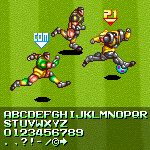
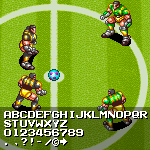


This is the code.
I then redirected the output to a file which I then opened it using Notepad in Windows 2.0.
»